Thanks to his skills, Payer was recommended to take part in the second German polar expedition to the eastern coast of Greenland as head of the sledge expeditions. He succeeded in exploring and mapping the coastline with its numerous islands, discovered King Wilhelm Land and was the first to introduce mountaineering into Arctic research. The mountain he climbed there was named Payer Peak.
Payer’s next journey was with the first Austrian expedition to the Arctic Ocean. Their task was to ascertain whether there was an open sea route towards the Siberian coast. However, this idea proved unrealistic when they encountered ice floes.
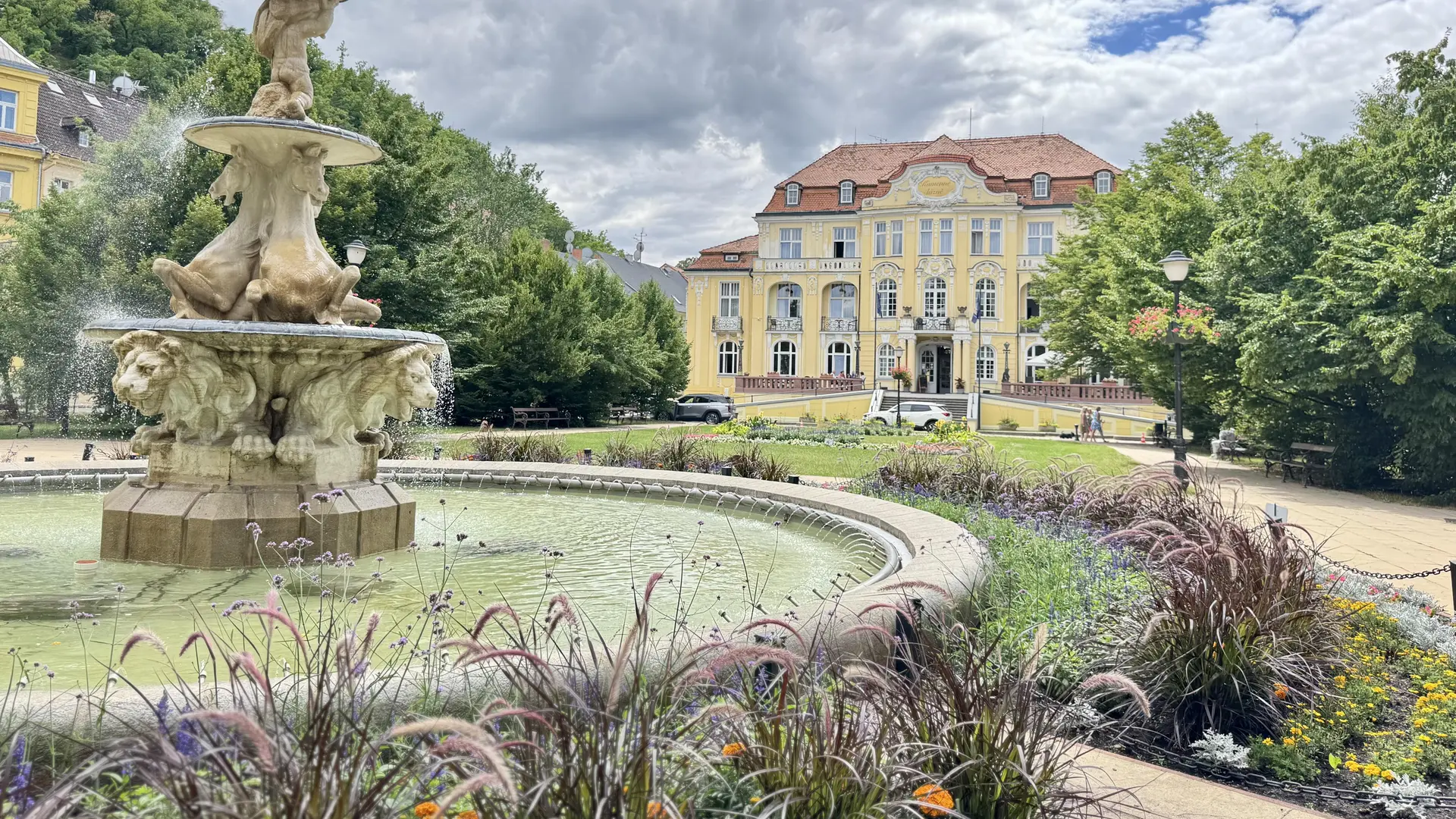
Consequently, a second Austrian polar expedition was dispatched to attempt once more to find an open route to the east or to the North Pole. The situation, however, was far worse than on the previous expedition, and the ship became trapped in a grip of ice floes, where it froze in place and was driven in various directions, mainly northwards. As the steamer was uncontrollable, the crew built a makeshift shelter on an ice floe. They reached a previously unknown group of islands, which they named the Franz Josef Land after the then Emperor. They had to set out on their return journey without the ship. Their spectacular return was marked by celebrations and culminated in an audience with the Emperor. Payer then returned to his hometown of Teplice.
His successful expedition was followed by a series of lectures across European countries; however, Payer intended to devote himself solely to art from then on and left the army. He began studying painting in Salzburg, then in Frankfurt, where he also got married. After completing his studies, he moved with his family to Paris, where he went blind following an infection and separated from his wife. He returned alone to Vienna, where he founded a school of painting and painted his most famous work, ‘Never Back!’.
Following a stroke, he lost his ability to speak and became partially paralysed. He died on 4 September 1915 and was buried in a grave of honour in Vienna.